Transforming a garden into a pleasant space is not just about choosing pretty plants. The soil, exposure, actual use of the land, and the profile of the people living there influence every landscaping decision. Since decree no. 2025-1478 of December 15, 2025, the rules governing certain outdoor developments have evolved, changing the game for individuals considering structural work in their gardens.
Accessible garden for active seniors: rethink the layout from the design stage
The aging of the French population profoundly changes how a garden should be conceived. Accessibility determines the sustainability of an outdoor layout far more than the choice of a decorative style.
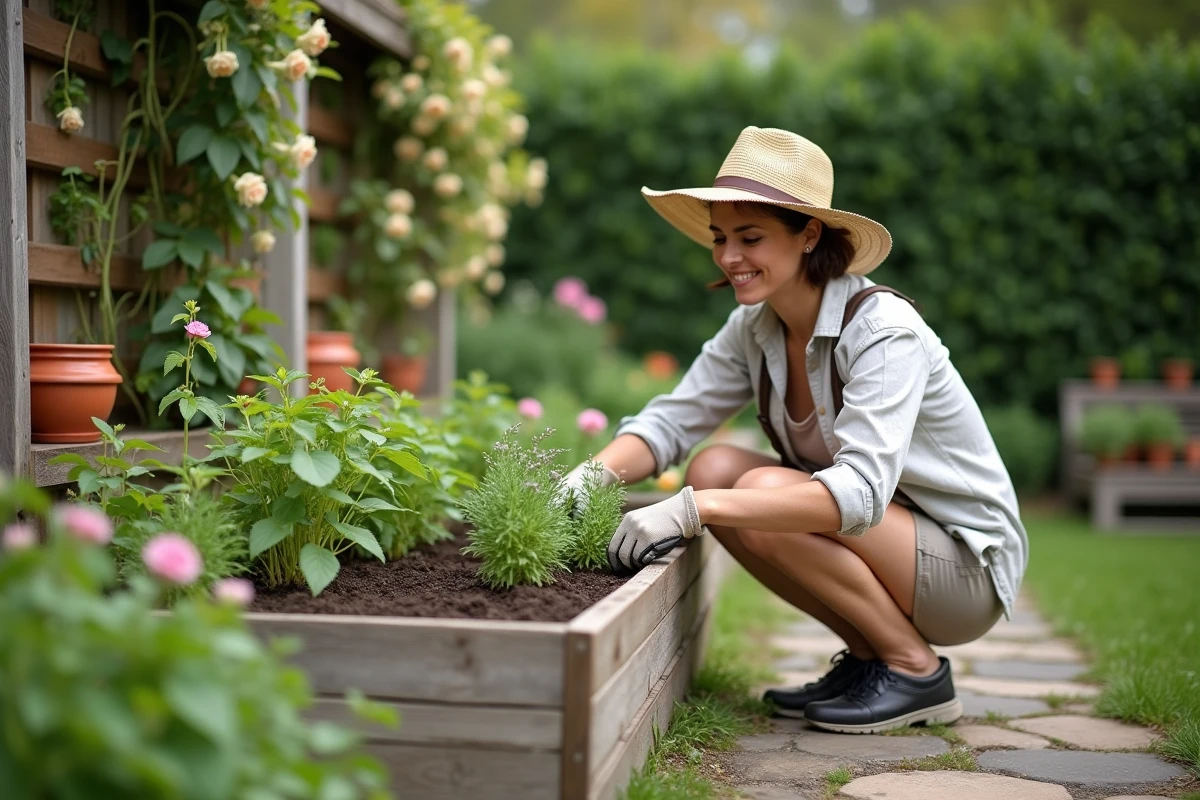
A garden designed for active seniors is based on three technical principles: wide and level pathways, raised planting areas, and a plant selection that minimizes manual interventions. Pathways must allow for the passage of a walker or wheelchair, which requires a minimum width and a stable surface (tight-jointed slabs, exposed aggregate concrete, stabilized gravel).
Raised vegetable beds, installed between 60 and 80 cm off the ground, eliminate the need to bend down. Paired with an automatic irrigation system, they make gardening feasible even for those with reduced mobility. For borders and flower beds, evergreen ground cover plants (pachysandra, vinca, epimedium) are a better choice than grass, which requires regular mowing and significant physical maintenance.
On Monsieur Bricoleur’s garden, several detailed sheets outline concrete solutions for adapting an outdoor space to these constraints without sacrificing aesthetics.
Smart irrigation and water management in the garden
Water remains the most underestimated aspect of an outdoor landscaping project. Hand watering a medium-sized garden consumes considerable amounts, and most homeowners do not realize the difference between manual watering and a controlled system.
Solar sensor irrigation systems significantly reduce water needs for amateur gardeners in temperate climates. These devices measure soil moisture in real-time and trigger watering only when the plant needs it.
What a moisture sensor changes in daily life
A buried sensor at the root transmits its data to a controller. The system stops watering after rain or when the moisture level exceeds the set threshold. For a garden designed to be “low maintenance,” this automation eliminates the daily chore and protects plants from excess water, the leading cause of mortality for potted and bedded plants.
The installation cost varies depending on the area and complexity of the network, but field reports converge: the investment pays off in a few seasons through reduced water bills and lower plant replacement rates.
Choosing plants and designing a low-maintenance garden
The “Garden Trends 2025” report from the National Federation of Garden Plant Producers (FNPHP) confirms a marked shift towards plants with low water needs and limited maintenance. This trend is not only for seniors: it reflects a change in the relationship with free time among all garden owners.
A low-maintenance garden does not mean an empty garden. It relies on a rigorous selection:
- Slow-growing evergreen shrubs (pittosporum, osmanthus, choisya) that require only annual pruning and maintain their volume all year round
- Ornamental grasses (miscanthus, stipa, pennisetum) that add movement without requiring special care other than cutting back at the end of winter
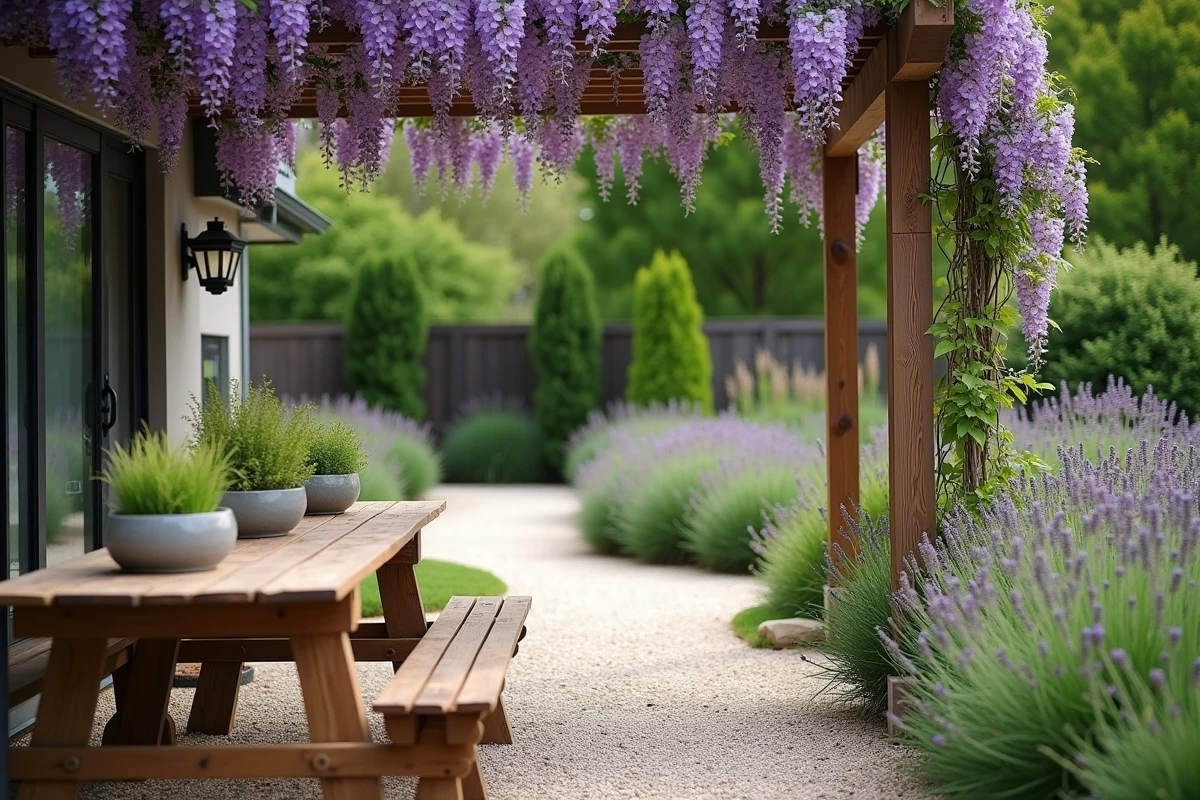
- Climbing plants suited to the existing structure (star jasmine, clematis armandii) that dress up a wall or pergola without complex staking
- A thick mineral or organic mulch that slows the growth of weeds and retains soil moisture
Grass or alternatives to grass: a decision to make early
Traditional grass remains the biggest time consumer in a garden. Weekly mowing, scarifying, fertilizing, watering: the annual cumulative hours of maintenance are significant. Alternatives exist, from dwarf clover (which fixes nitrogen and does not exceed a few centimeters) to synthetic grass, which has improved in quality but raises environmental concerns about its end of life.
The choice between living grass and ground cover depends on the actual use of the area. A children’s play area does not tolerate trampled clover well. In contrast, a space viewed from a terrace has no need for closely mown grass.
Connected gardens and well-being: what the initial data shows
The “Gardens and Mental Health 2025” survey from the University of Strasbourg, published in the journal Horticulture & Society in January 2026, reports that users of hybrid connected gardens report a decrease in stress since the integration of plant monitoring applications starting mid-2025.
These applications inform the gardener about the state of their plants via notifications: need for water, detected nutrient deficiency, frost alert. The garden becomes a space for mutual care, where technology reduces anxiety related to the fear of “doing it wrong.”
The available data does not yet allow for conclusions about the exact extent of this effect. The impact varies depending on the type of garden, local climate, and the gardener’s level of involvement. What seems established is that removing the mental burden of maintenance frees up time to enjoy the garden rather than work in it.
A dream garden does not need to be spectacular. It needs to be adapted to the people who live there, their mobility, their schedules, and their tolerance for maintenance. The tools exist, as do the plants. Precisely defining the use of each area before planting remains the best way to avoid costly mistakes.