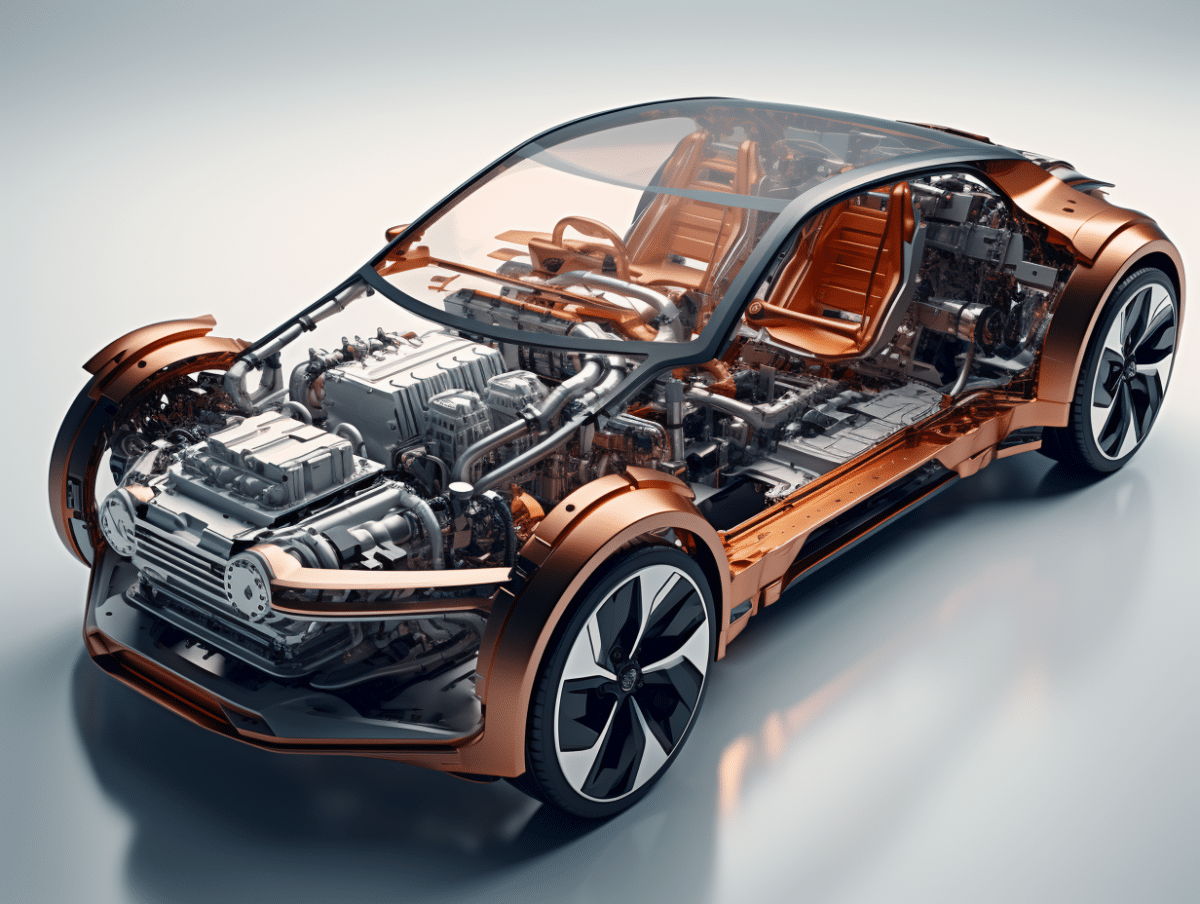
The automobile has come a long way since the creation of the internal combustion engine. Once, power and performance were dictated by mechanical prowess; today, it is the era of software that shapes the driving experience. Automakers are transforming their vehicles into connected platforms, equipped with autonomous driving systems, advanced safety features, and intuitive user interfaces. This transition marks a turning point where software engineering becomes as crucial as traditional mechanics, revolutionizing the interaction between man and machine and redefining what it means to be behind the wheel.
From Mechanics to Digitization: The Technological Evolution of the Automobile
The automotive sector is witnessing an accelerated transformation, driven by the advent of the electric car and the increasing integration of software into vehicle systems. Automakers are evolving into high-tech players, competing with the giants of Silicon Valley. Tesla, a pioneer in this field, has paved the way by intensively integrating software development into its models, while traditional companies like Volkswagen with its Car.Software division are opening new perspectives in the approach to software-defined vehicles.
Bretagne-net.com, always on the lookout for the latest innovations, reports that electric vehicles are set to become the norm in Europe by 20This energy transition necessitates a complete overhaul of industrial strategies. Engineers at companies like Continental and Renault now have to deal with higher costs related to semiconductors, which are necessary for the advanced management of batteries and electronic systems in electric vehicles.
At automotive giants like Toyota, BMW, PSA which has become Stellantis, and emerging players such as Lynk & Co and Nio, competition translates into a frantic race for software development. Strategic alliances are multiplying, such as the one between Volkswagen and Continental, aimed at co-developing innovative software solutions. Renault, for its part, is facing its competitor PSA in the realm of digitization, seeking to optimize the performance of its vehicles through embedded solutions.
Keep in mind that beyond electrification, digitization is redefining the driving experience. Cars, once simple means of transportation, are becoming connected living spaces, personal assistants on wheels, equipped with artificial intelligence and capable of learning from their owners. The automotive industry is thus entering an era where software determines added value and where software development is becoming a central pillar of modern automotive engineering.

The Growing Role of Software in Driving Experience and Automotive Performance
Automotive software is no longer just an accessory; it now represents the backbone of automotive innovation. Battery software management is an absolute necessity for electric vehicles, where energy efficiency is crucial. Tesla, known for its expertise in this area, develops its own lines of code, giving its cars a notable technological edge. Traditional automakers, with fewer personnel dedicated to software development, face a dilemma: develop in-house or acquire external expertise.
The rise of autonomous vehicles and artificial intelligence emphasizes the importance of software in the driving experience. Interactions between vehicles and road infrastructure, as well as autonomous driving features, heavily depend on the quality and sophistication of embedded software. For example, Vehicle-to-Load (V2L) and Vehicle-to-Grid (V2G) are technologies that allow respectively powering electrical devices and sending energy back to the grid, requiring reliable and secure software to manage these exchanges.
Microsoft, a collaborator with Volkswagen, exemplifies this trend where technology giants and automakers are partnering to develop advanced software solutions. This synergy between sectors aims to enrich the user experience and optimize automotive performance through expertise in software and data.
Products such as the Nissan Leaf, equipped for V2G use, or the Tesla Powerwall, a home energy storage solution, demonstrate the deep integration of vehicles into our personal and collective energy ecosystem. Services like Free2move from Stellantis, offering car rentals, also leverage software to enhance accessibility and vehicle management. These software innovations are transforming vehicles into interconnected platforms, where electrical and electronic architecture becomes as decisive as the engine once was.