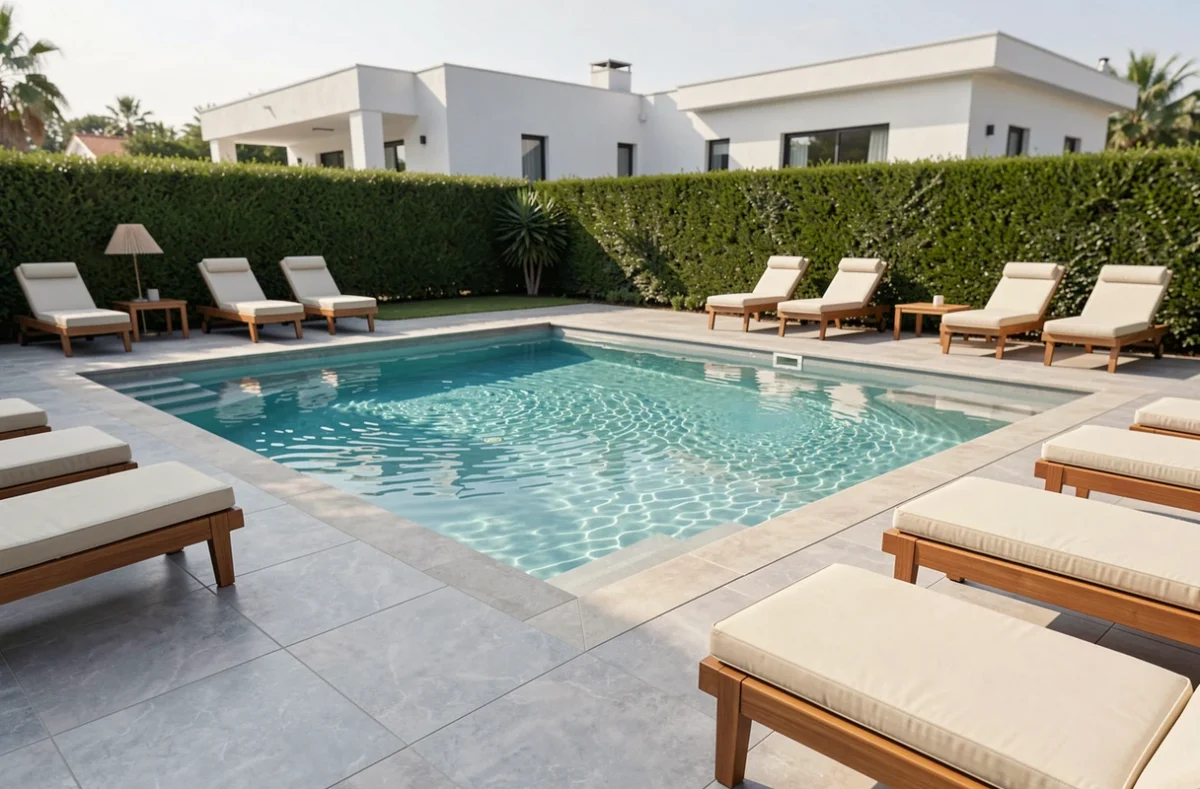
A residential swimming pool in France is subject to planning rules, tax obligations and, depending on the time of year, water-use restrictions. Before choosing the shape of the pool or the colour of the coping stones, these constraints determine what is actually feasible on a given plot.
Planning permission, local regulations and taxes for a residential pool
The pool’s surface area determines which formalities apply. A small pool may only require a prior declaration, while a larger project or one with an enclosure above a certain height may require a building permit. The municipality’s local urban development plan (PLU) also sets rules on where the pool can be built, including distances from property boundaries, maximum ground coverage and, in some protected areas, possible restrictions or bans.
One detail that often comes to light too late: Manosque town hall reminds residents that a pool must be declared to the tax authorities within 90 days of the work being completed. This tax obligation applies nationwide and may lead to a reassessment of property tax. Checking these requirements before signing a quote helps avoid administrative surprises during construction.
To explore your project further, find pool advice on Mon Blog Déco, including tips on the decorative aspects of your design.
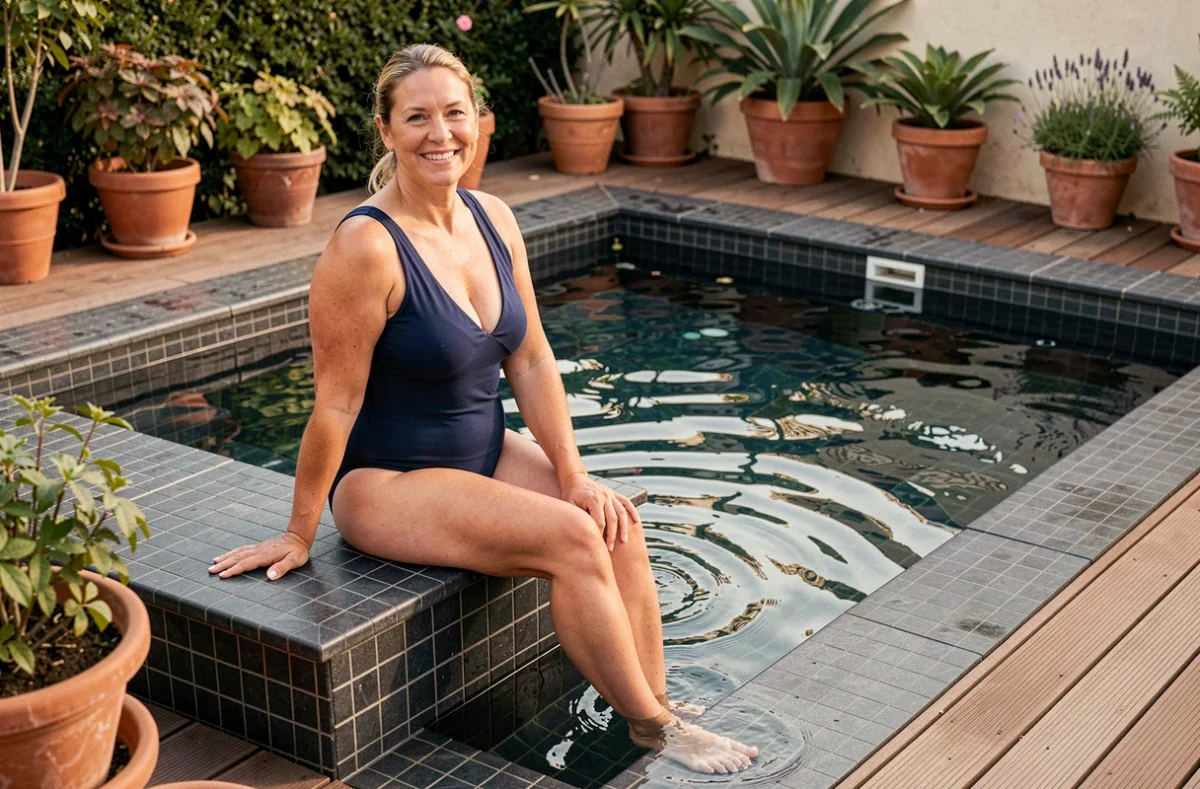
Water restrictions and filling your pool: check before construction
During periods of drought, a prefectural order may limit or prohibit filling and topping up private pools. The rules vary by department, alert level and sometimes even by municipality. Completing a pool in June only to find you cannot fill it until September creates a real logistical and financial problem.
Make it a habit to check the VigiEau platform before planning to fill your pool. It shows the restrictions that apply to a specific address. Planning ahead lets you schedule construction accordingly or choose a smaller pool that can be filled more quickly when conditions allow.
Choosing a pool size to suit local water conditions
A compact pool (less than 10 m long) uses significantly less water to fill and maintain than a large lap pool. In regions regularly affected by restrictions, this factor matters just as much as appearance when choosing a pool size.
Pool location and thermal comfort around the water
The pool’s orientation determines how many hours of direct sunlight reach the water, affecting its natural temperature and comfort on the pool deck. A south-facing pool warms up more, but the adjacent seating area can become stifling in summer without shade.
Shade is more than a decorative choice; it’s a way to improve thermal comfort. A pergola, shade sail or deciduous trees, positioned carefully, can protect the pool deck from the sun during the hottest hours while still letting light through in the shoulder seasons. Their placement should take prevailing winds into account: a constant breeze across the pool speeds up evaporation and cools the water.
Here are a few things to check before deciding where to put the pool:
- The pool’s sun exposure between 10 a.m. and 4 p.m., when people are most likely to swim
- Nearby trees that could drop leaves into the water (more cleaning and a risk of clogged filters)
- Protection from the wind, which may call for a hedge or windbreak wall on the north or north-west side
- Distance from the house, for easy access to the bathroom and the pool equipment room’s electrical supply
Pool covers: safety and heat retention are not the same thing
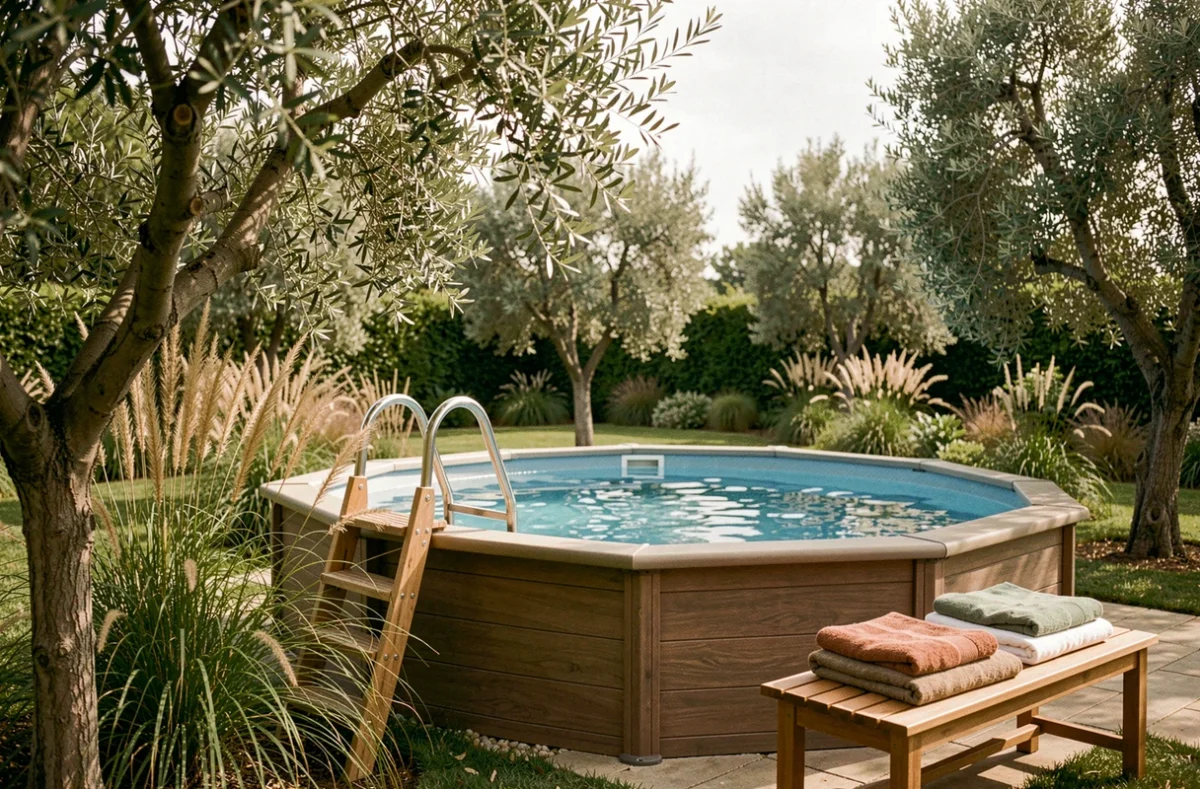
It is still common to confuse bubble covers with safety covers. A bubble cover reduces evaporation and retains the heat accumulated during the day, but it does not meet French safety regulations. It cannot support a child’s weight and is no substitute for an approved automatic cover, a barrier or an alarm.
The right cover depends on what you actually need it to do:
- Reduce evaporation and maintain water temperature: bubble cover or opaque cover
- Certified safety (NF P90-308): automatic roller cover or rigid cover tested to withstand an adult walking on it
- Two-in-one insulation and safety: some above-ground or submerged roller covers offer both, but check the product specifications to confirm compliance
Routine maintenance and its effect on lifespan
A cover used every day wears out faster than one only put in place for winter. Motorised models need an annual mechanism check. Regularly rinsing a bubble cover with clean water helps extend its lifespan by preventing pool chemicals from damaging the plastic.
Pool deck design: materials and how you’ll actually use the space
Pool decking is often chosen from a catalogue, without considering how it feels in real conditions. In full sun, some materials tell a different story. Dark natural stone can become scorching underfoot, while composite decking stays cooler but needs regular maintenance to prevent algae growth.
Testing the surface barefoot in midsummer is still the best way to choose. Light-coloured reconstituted stone slabs or non-slip porcelain tiles offer a good balance of surface temperature, chlorine resistance and ease of cleaning. Exotic hardwood ages well but needs annual treatment to retain its colour.
The space around the pool deserves as much attention as the pool itself. If the deck is too narrow, you’ll have to put the sun loungers on the lawn, which turns to mud after every swim. Allowing at least one and a half metres of clearance along at least two sides of the pool makes the space practical for everyday use.
A successful pool project depends less on choosing a show-stopping design than on finding the right fit between the pool, the plot and local requirements. Checking the PLU, planning for water restrictions and testing materials in real-world conditions are three steps that can make the difference between a lasting improvement and an investment you regret after the first summer.