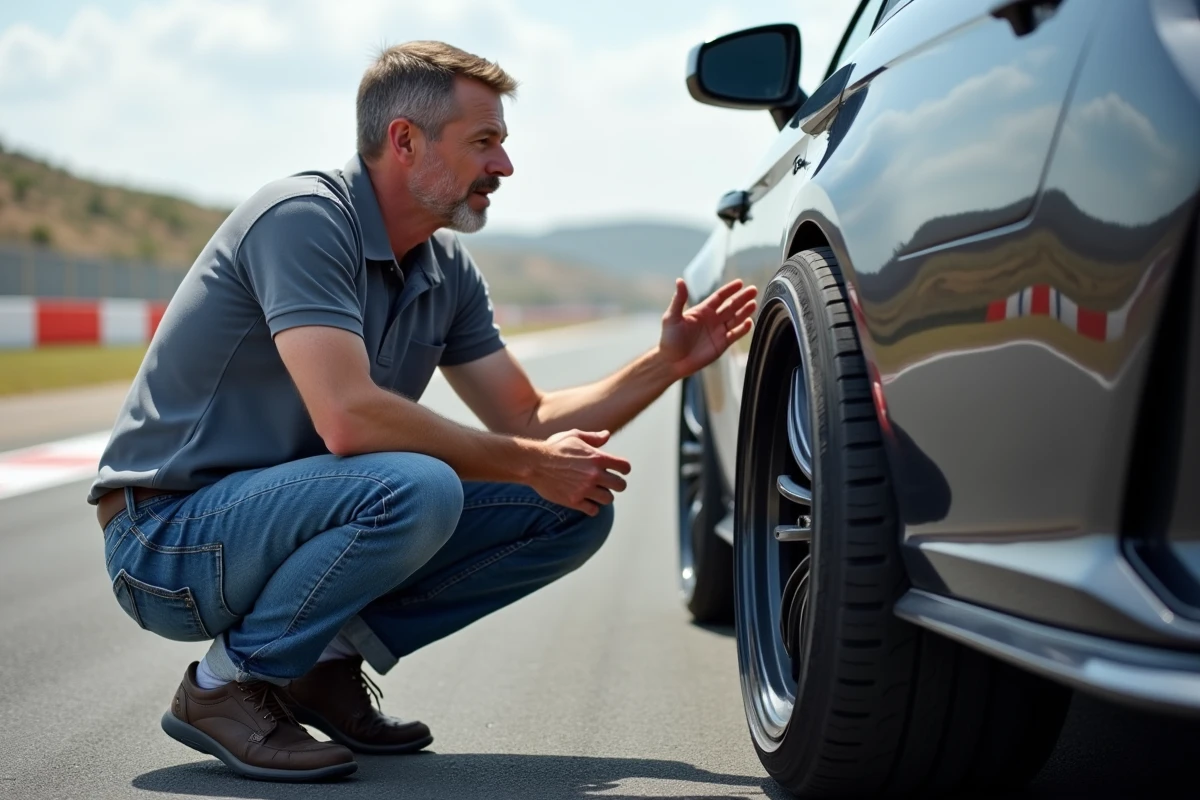
Continental has not built its reputation on empty slogans, but on the weight of technique and industry. The Sebring brand, backed by this German giant, benefits from a network of specialists like Feu Vert to establish itself in the European market. Here, the price hits the mark, but it is on the road and over the long term that the differences become apparent. Opinions vary, fueled by drivers’ experiences and the results of independent tests, sometimes flattering, sometimes more nuanced. A playground where reality strips away the masks.
What the history of the Sebring brand reveals: between industrial lineage and European reputation
The trajectory of Sebring has been written in the wake of the German industry and its strategic alliances. A European brand, supported by a solid history, Sebring benefits from a notable partnership with IHLE, a subsidiary of Michelin. This rapprochement, far from being trivial, opens the doors to proven technologies and demanding manufacturing processes inherited from the French tire leader.
The origin of Sebring tires is therefore neither a legend nor marketing: it relies on European production sites, sometimes with a French anchor, where every step of the process is scrutinized by seasoned professionals. Michelin engineering thus joins the production lines, but adapted here to a segment where price remains decisive without sacrificing reliability. Two guiding principles shape the design:
- a controlled cost to remain accessible to the greatest number
- a robustness designed for everyday journeys
The European regulatory framework acts as an arbiter. Rubber mixtures, vulcanization, quality controls: nothing is left to chance, as safety and compliance are closely monitored. In this universe where technical performance reigns, Sebring must convince beyond technical sheets.
The brand’s reputation is also woven through discussions on the origin and reviews of Sebring tires, where the question of traceability and added value occupies an increasingly prominent place. This alliance with Michelin is not limited to a common logo: it shapes trust, nourishes a collective imagination, especially among European motorists in search of certainties and tangible benchmarks.
Ultimately, Sebring embodies a dual identity: rigorous European production, industrial anchoring, and a clear desire to maintain an accessible positioning. This mix fuels discussions on transparency and reliability in the tire world, where legitimacy is earned through facts.
Sebring Tires: how do they really compare to the competition?
On paper, the Sebring range covers all standard needs. Summer, winter, all-season: the main situations are mapped out, whether driving a city car, SUV, or utility vehicle. The components, selected for their quality, emphasize rubber and groove depth to ensure effective water evacuation and limit aquaplaning. In the factories, production follows European requirements and prioritizes recyclable materials.
To better understand the strengths and nuances, here are the characteristics that most often appear in reports and tests:
- Comfort: noise remains contained, and road imperfections are convincingly absorbed.
- Grip: good handling on dry surfaces, reassuring behavior for urban or family trips.
- Price: a significant advantage, the difference is noticeable compared to premium brands and attracts tight budgets.
- Durability: between 30,000 and 40,000 km claimed, but aggressive driving accelerates wear.
Among the flagship models are Ultra High Performance, Road Performance, All Season, or Formula Road+ 301. The target audience? Young drivers, fleet managers, owners of secondary or older vehicles, those who want to limit spending without compromising on basic safety. On wet surfaces, performance remains acceptable, but it should be noted that the level of confidence decreases in heavy rain or mid-winter: caution is advised.
However, attention should be paid to two aspects noted by those who rack up the kilometers: road noise can become more pronounced, and wear accelerates with dynamic driving or on the highway. Sebring does not play the spectacular card: the brand appeals to those who primarily want to drive without breaking the bank, betting on the balance between safety, comfort, and price.

User reviews and feedback: myth or reality around Sebring’s performance
On forums and in real life, feedback is often more candid than marketing speeches. Owners of Citroën C3, regulars of the Peugeot 308: they all agree on one thing, the quality/price ratio holds up for everyday journeys, in the city or on suburban roads. The availability of models, the variety of sizes, and the ease of installation appeal to those equipping a second vehicle or looking to manage their budget without compromising on regulatory safety.
Here’s what stands out most from the feedback:
- Comfort on dry and degraded roads, perfect for those who drive moderately (less than 15,000 km per year).
- Fuel consumption remains unchanged, no adverse effects on the bill according to testimonies.
- Noise level: some report a sharper road noise starting at 90 km/h, especially on the highway.
- On wet pavement, grip remains acceptable, but vigilance must be heightened in stormy weather or heavy rain.
In summary, a consensus emerges: Sebring delivers on its promise for standard uses, family vehicles, city cars, light utilities. Criticisms mainly target noise management with wear, handling on wet roads, and limited endurance on high mileage or powerful engines. Those seeking an affordable solution, compliant with European rules, prefer this compromise to the pursuit of extreme performance. For everyone else, the road remains open, and comparison, ongoing.