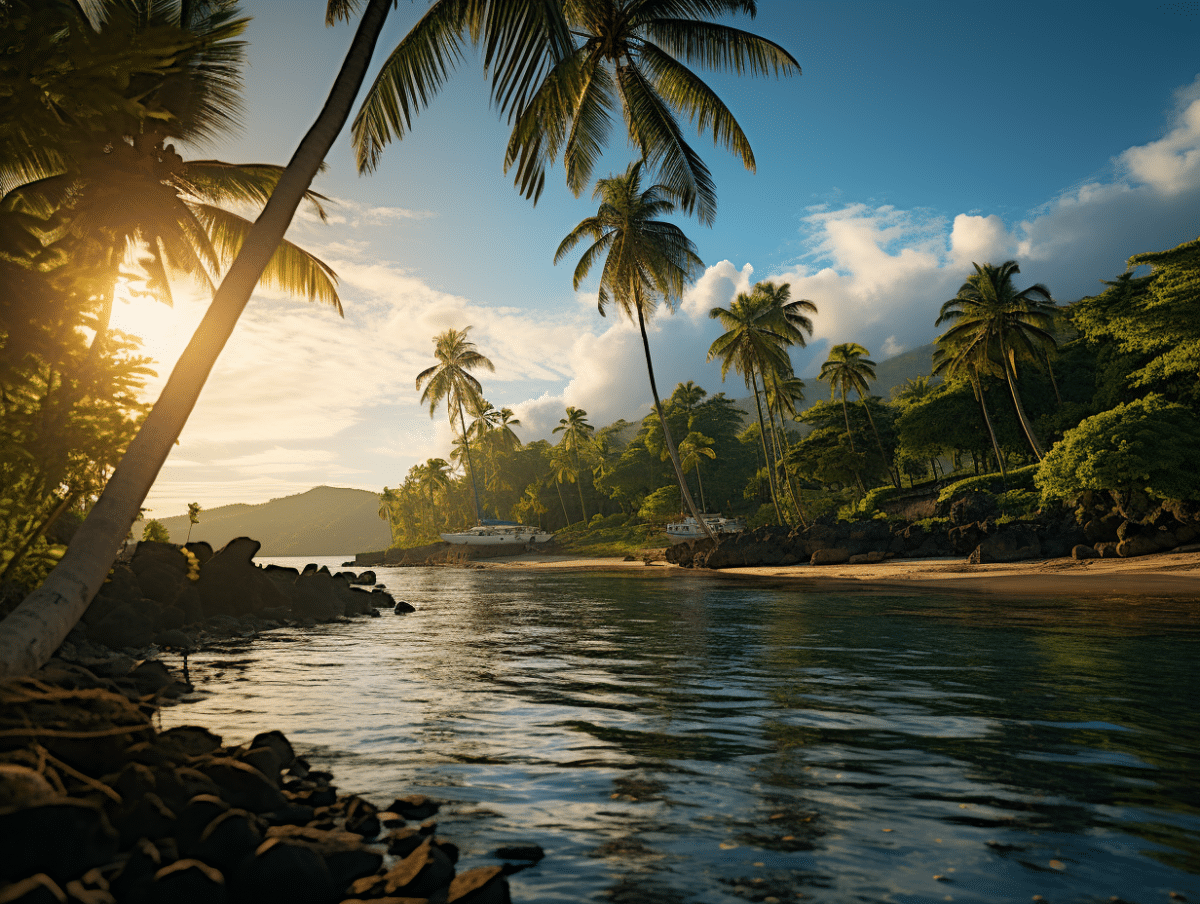
Guadeloupe, an archipelago in the Caribbean, is a paradise for sailing and boating enthusiasts, with its turquoise waters and rich biodiversity. To ensure that the experience is as serene as the landscape, certain precautions are essential. It is important to know the areas suitable for peaceful navigation and those that present risks, whether due to unpredictable weather conditions, strong currents, or the presence of hidden reefs. A peaceful vacation at sea depends on preparation and knowledge of the terrain.
Safety tips for a peaceful stay in Guadeloupe
Safe navigation areas in Guadeloupe
In the heart of the French Caribbean archipelago, Guadeloupe attracts visitors with its natural beauty and rich culture. To navigate safely in Guadeloupe, favor the waters near the white sand beaches, known for their calmness and accessibility. These areas, often protected from weather fluctuations by coral reefs, offer ideal sailing conditions for boaters seeking peaceful vacations.
The Guadeloupe National Park, a jewel of biodiversity, is a favored area for sailors. The regulations here are designed to ensure the safety of visitors while preserving the unique ecosystem of the region. Follow the safety tips for a peaceful stay in Guadeloupe: inform yourself about protected marine areas and recommended routes before setting sail.
The archipelago offers a diverse nautical experience, allowing everyone to discover, at the whim of the waves, a rich cultural heritage. The paradisiacal beaches, like those of Grande-Terre, are havens of peace for fans of light sailing or boating. To ensure the safety of your journey, stay informed about weather and sea conditions, and do not hesitate to seek assistance or advice from local marinas.
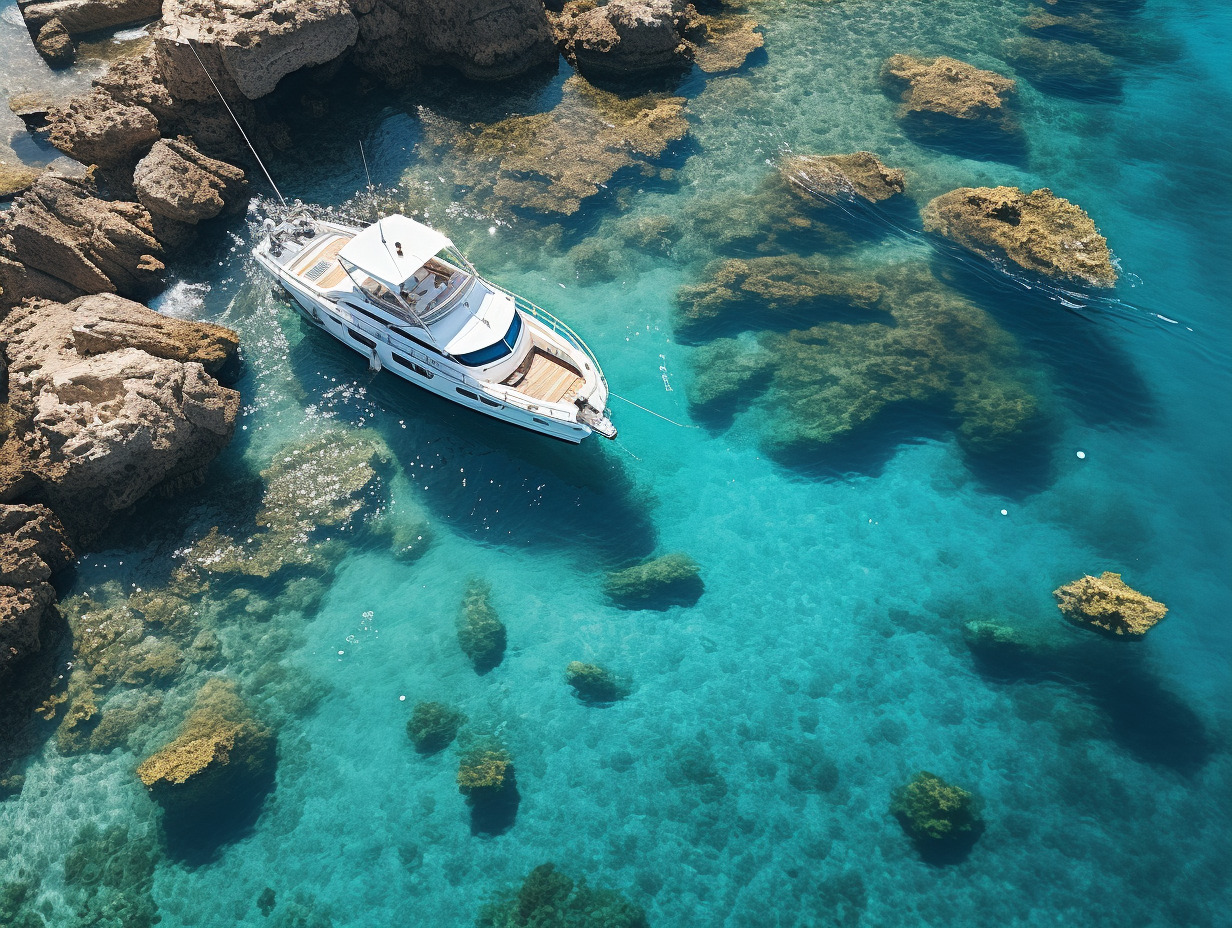
Precautions and areas to avoid for serene navigation
In Guadeloupe, personal safety should guide your navigation choices. Certain areas, less frequented and less monitored, may be the scene of thefts and assaults. It is advisable to avoid isolated anchorages after sunset and not to display ostentatious signs of wealth. In ports and marinas, be vigilant and always inform a trusted person of your itinerary.
Health risks should also guide your conduct at sea. Protect yourself against diseases transmitted by mosquitoes by following the recommendations of the World Health Organization and the Ministry of Health: use compliant repellents and sleep under impregnated mosquito nets. In case of discomfort, know that the University Hospital Center of Pointe-à-Pitre offers quality medical services and that the SAMU is accessible for any medical emergency.
Particularly avoid the waters of the cul-de-sac marin during heavy rain periods, which can lead to difficult navigation and compromise the safety of vessels. The city of Pointe-à-Pitre, although the capital and central hub of the island, has certain peripheral areas to avoid during your stops. Caution remains the best ally to ensure a trouble-free stay on this Caribbean archipelago, where sustainable and responsible tourism is a priority.