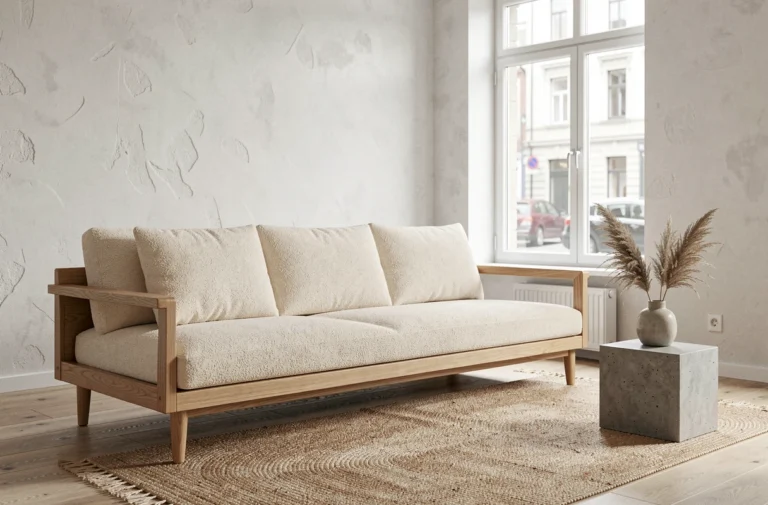
We move house, pick up a piece of furniture from a relative, and end up with a living room that no longer feels cohesive. The problem is almost never the budget; it’s the lack of a guiding thread.
Decorating your home without a plan means piling up objects that work individually but create constant visual noise when put together. Starting with a practical constraint (the available light, the size of the room, a bulky piece of furniture you don’t want to replace) delivers better results than browsing inspiration catalogs.
Choose a color palette based on the room’s actual light
Before choosing a decorating style, look at the natural light. A north-facing room gets cool, consistent light that makes whites look gray. Painting the walls pure white makes the room feel even colder, while an off-white with yellow undertones or a warm beige helps restore balance.
Conversely, a south-facing room can easily handle deep shades (sage green, terracotta, teal) because direct sunlight warms them up and keeps the space from feeling closed in. Choose colors wall by wall, not from a paint chart in the store. Buy a sample, apply it to the wall you have in mind, and observe it at three times of day: morning, midday, and under artificial light in the evening.
For the rest of the palette, stick to a maximum of three colors per room: a dominant color (walls and floor), a secondary color (furniture or large textiles), and an accent color (cushions, decorative objects, frames). This ratio helps prevent mistakes without forcing you into a monochrome interior. You’ll regularly find practical examples of palettes suited to different lighting conditions in Actu Buzz’s home section.

Living room decor: start with the piece of furniture you won’t replace
The living room is where most decorating frustrations build up, because it’s where we accumulate purchases made at different times. The most practical approach is to identify the piece of furniture you’re keeping (usually the sofa, sometimes a bookcase or an inherited coffee table) and build around it.
Downplay an overpowering sofa
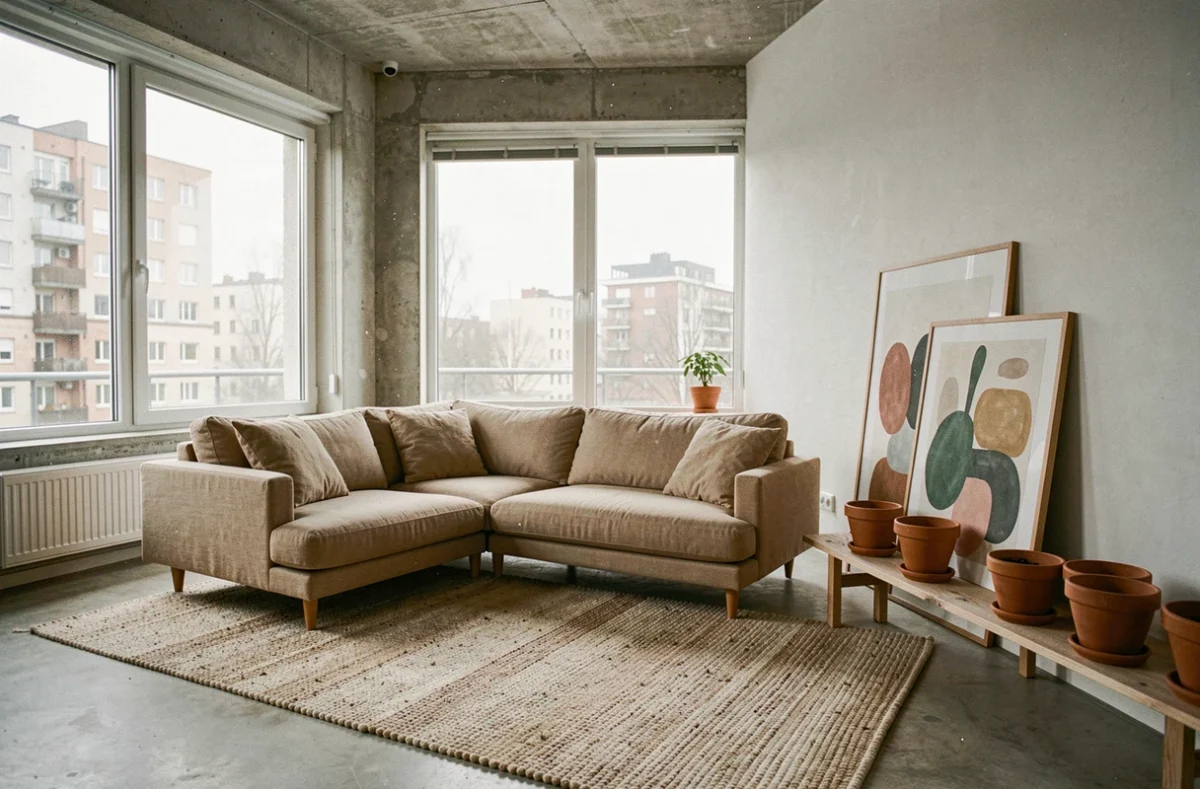
A large sectional in a bold color is a starting point, not an obstacle. Surround it with textures and shades that help it blend in rather than compete with it. A thick wool throw and cushions in a similar shade bring everything together without requiring you to buy a new sofa.
If the sofa is gray or beige, it’s even easier: add personality with textiles (a washed-linen cushion cover, a woven cotton throw) and a rug that anchors the living area. The rug visually defines the conversation area, giving the room structure even in a large open-plan space.
Decorative objects: three instead of twelve
A common mistake is scattering small objects across every flat surface. The result feels like an accidental flea-market haul, not a personalized home. A practical rule: arrange a group of three objects of different heights on each surface (shelf, console table, coffee table). For example, a vase, a candlestick, and a stack of two books. The empty space around them makes each piece stand out.
Secondhand furniture and reuse: practical selection criteria
Buying secondhand furniture is no longer a compromise; it’s a deliberate decorating choice. The furniture reuse sector is gradually taking shape, supported by extended producer responsibility schemes, according to ADEME. In practice, this means a growing selection at reuse centers, specialist consignment stores, and online platforms.
Check whether a piece can be disassembled and repaired before buying to help extend its lifespan. The French Furniture Industry’s 2025–2030 sector guidelines encourage the design of furniture with replaceable components. The same principle applies when buying secondhand: a sideboard with replaceable hinges and adjustable shelves is a better choice than a glued, non-dismantlable model, even if the latter is newer.
- Test the sturdiness of the joints (drawers, legs, doors) by handling the piece in person, rather than just looking at photos
- Check whether wear-and-tear parts (handles, casters, glides) are available from standard hardware stores
- Choose solid wood or metal, which can be sanded, repainted, and repaired, unlike particleboard that has swollen from moisture
- Measure the exact depth and height before moving the piece, especially if it’s intended for a hallway or alcove
Create a different mood in each room without redoing everything
You don’t always have the budget or the desire to repaint. A few simple changes can transform a room’s atmosphere without any renovation work.
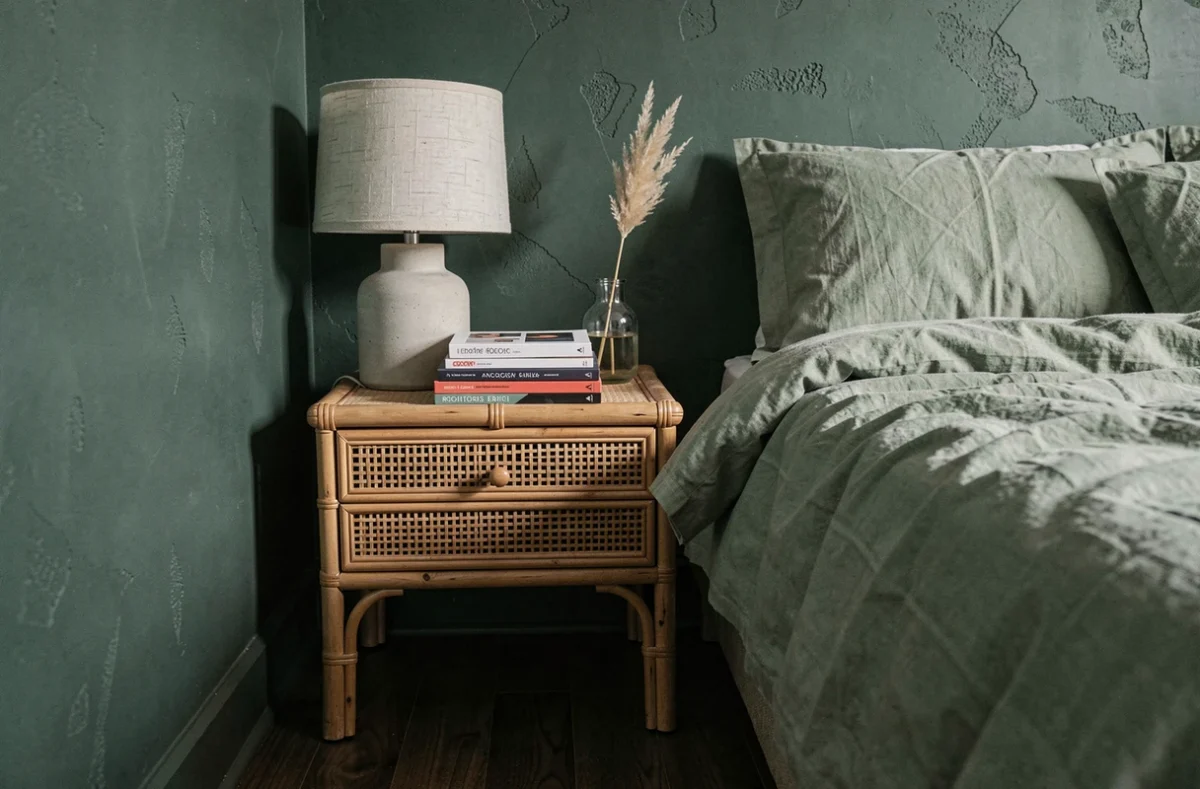
Indirect lighting transforms a space faster than a fresh coat of paint. Replace a central ceiling light with two or three low-level light sources (a table lamp, a subtle string of lights, an adjustable wall sconce) to go from clinical lighting to a warm, enveloping atmosphere. This approach works especially well in the bedroom: soft side lighting at headboard height is a much better option than a ceiling spotlight.
Textiles can have a similar effect. Change the curtains, add a rug where there wasn’t one, or lay a linen runner on a bare piece of furniture: these inexpensive touches change how the room feels. Build up layers one at a time rather than redoing everything at once.
Houseplants: fewer, but better
Three well-placed plants are better than an improvised jungle. Choose them based on the actual light (no Ficus lyrata in a windowless hallway) and group the pots on the same stand to create a focal point of greenery. A single large plant in a terracotta pot can bring structure to an empty corner without getting in the way.
- Monstera or Philodendron for bright rooms with floor space
- Pothos or Scindapsus for high shelves, thanks to their trailing growth
- Sansevieria for low-light rooms; it’s nearly indestructible and has a striking shape
Creating an interior that feels like you isn’t about following a named decorating style. Start with what you have (the light, existing furniture, the space), settle on a limited palette, and add things in layers. You should be able to remove the last object you put down without the room falling apart visually: that’s a sign you’ve created a solid look, not a fragile collection of things.